Lipoxygenase Pathway
Genes
Compounds
Output
hexanal
(Z)-3-hexenal
1-penten-3-ol
Fresh green cut aromaSharp grassy freshnessGreen beany volatility
Ester & Amino Acid Volatile Pathway
Genes
Compounds
Output
cis-3-hexenyl acetate
hexyl acetate
Sweet green floral esterMild fruity sweetness
Biotic Stress Resistance
Genes
Compounds
Output
I-gene resistance protein
PR defence proteins
Immune to Bean Common Mosaic VirusReduced Ascochyta blight pod lesions
Pod Morphology & Texture
Genes
Compounds
Output
Reduced lignin in pod suture
Stringless tender pod texture
Phenylpropanoid & Pigmentation
Genes
Compounds
Output
anthocyanins
flavonoids
Dark brown speckled seed coatAntioxidant phenolic content in seed
Haricot Nain Cupidon
French Bean
Details
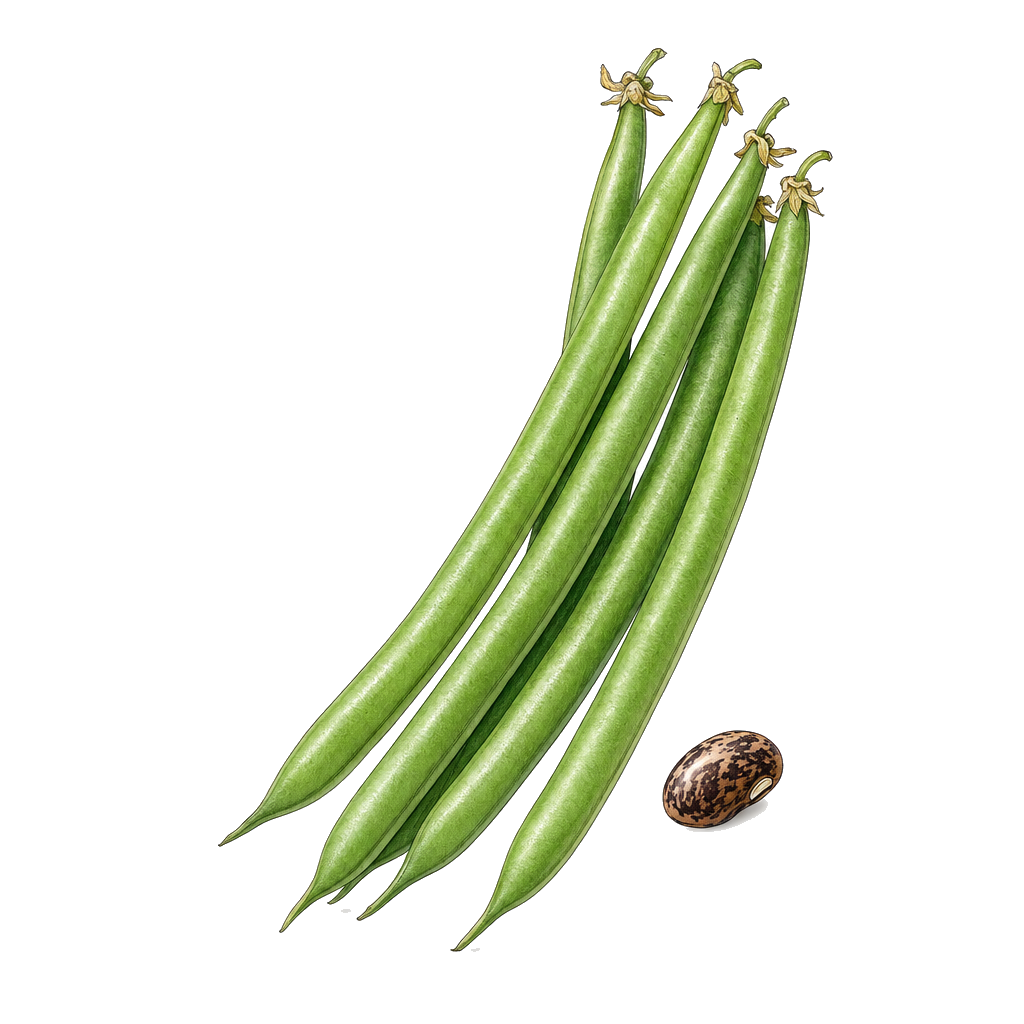
Cupidon is a fine French dwarf bush bean (haricot filet) bred by Gautier for Willemse France. It produces straight, round-section pods 16–20 cm long with a sweet flavour, very slow thread formation, and medium-early maturity (~70 days). Disease resistance to BCMV and Ascochyta is confirmed. Seed is dark brown speckled / brown-marbled. Suited to both market garden and home-garden production.
France (breeder: Gautier / Willemse France)
minimal
Root architecture
fibrousmixed growth
Depth
30–90 cm
typical 60 cm
Spread
30–60 cm
Growing profile
Germination
Days
5–9
Ideal °C
22°
Range °C
12–30
Days to harvest
65–75days
from direct sowHarvest window
10 days
Picking
Staggered
Seasonality
Sow
springsummer
Grow
springsummer
WinterFrost sensitive
medium confidenceAgrosemens product catalogue (crop cycle 70 days; germination 5–9 days at 22°C, minimum 12°C)
Flavor pathway activity
Each pathway is a biological "assembly line" inside the plant that produces specific flavor compounds. Higher activity = more of that flavor in the fruit.
Lipoxygenase Pathway65%
Ester & Amino Acid Volatile Pathway55%
Biotic Stress Resistance82%
Pod Morphology & Texture20%
Phenylpropanoid & Pigmentation70%
Key figures
Pod Length
16–20 cm
Pod Diameter
8–9 mm
Days to Harvest
70 days
Disease Resistance
BCMV + Ascochyta (CL)
Thread Formation
Very slow
Plant Height
~60 cm
Sensory profile
medium
Sweet
low
Acid
low
Umami
Dominant notes
fresh greenbeanygrassymild sweettender
Green & Vegetal
8
Sweet
5
Earthy
4
Floral
3
Aroma compounds
No variety-specific GC-MS volatile data exists for Cupidon. Aroma compounds are estimated from species-level Phaseolus vulgaris literature and the USPTO patent identifying SNP 8 as associated with 1-penten-3-ol expression. The LOX pathway is the primary driver of fresh green pod aroma in common bean. Confidence is uniformly low for this variety.
1-penten-3-ol
Green beany characteristic note
hexanal
Fresh-cut grass, green
(Z)-3-hexenal
Sharp grassy green freshness
cis-3-hexenyl acetate
Sweet green floral ester
(E)-2-hexenal
Green leafy, slightly sharp
Ideal soil conditions
Optimal soil conditions are drawn from Phaseolus vulgaris species-level agronomy. No Cupidon-specific soil trial data exists. Common bean is sensitive to cold waterlogged soils and fixes atmospheric nitrogen via Rhizobium symbiosis, requiring well-structured, free-draining soil with moderate fertility.
pH
6.0–6.8
Soil texture
Sandy loam to loam
Organic matter
2–4%
Nitrogen (mineral)
Low starter dose (20–30 kg N/ha)
Phosphorus
30–50 mg P/kg (Olsen)
Potassium
150–200 mg K/kg
Soil temperature at sowing
≥12°C (optimum 22°C)
Drainage
Free-draining; water table >60 cm
Recommended microbial interventions
Rhizobium phaseoliESSENTIAL
Reduces or eliminates the need for synthetic nitrogen fertiliser by fixing atmospheric N directly into the root nodules of Cupidon plants.
Rhizophagus irregularisBOOST
Improves phosphorus uptake in moderate- to low-P soils, supporting stronger nodulation, earlier pod set, and improved pod fill in Cupidon.
Trichoderma harzianumBOOST
Reduces Ascochyta blight severity on pods and leaves, complementing Cupidon's genetic CL resistance under wet or humid growing conditions.
Bacillus subtilisSUPPORT
May enhance fresh green pod aroma intensity at harvest while simultaneously reducing fungal disease pressure on foliage.
Pseudomonas fluorescensSUPPORT
Strengthens root and plant vigour in cool spring soils, potentially reducing BCMV incidence through induced systemic resistance.
These are variety-level recommendations - they apply to all Haricot Nain Cupidon plants. Your soil diagnostic will refine this further based on your specific conditions.
0% complete
Analyze your soil to optimize growing conditions
Re-run AI research and rebuild this variety profile
4 callouts en français — récolte, poids, durée, sucre
Botanical icon · garden scene · 3D splat — generate all in one click
Or check "+ 3D splat" above to chain it automatically after image generation